In a single working day, a business van is seen from every angle. Pedestrians see the kerbside panel as it parks. Drivers in the next lane see the other side at speed. Someone waiting behind it at a signal studies the rear doors for a full minute. People in office towers and car parks see the roof.
Most van wrap designs treat the vehicle as one big canvas and spread the same artwork around it. A more effective approach is to treat each panel as its own advert, with its own audience and its own job. This guide walks through each side of the van and explains what belongs where, so your van branding in Dubai works harder on every journey.
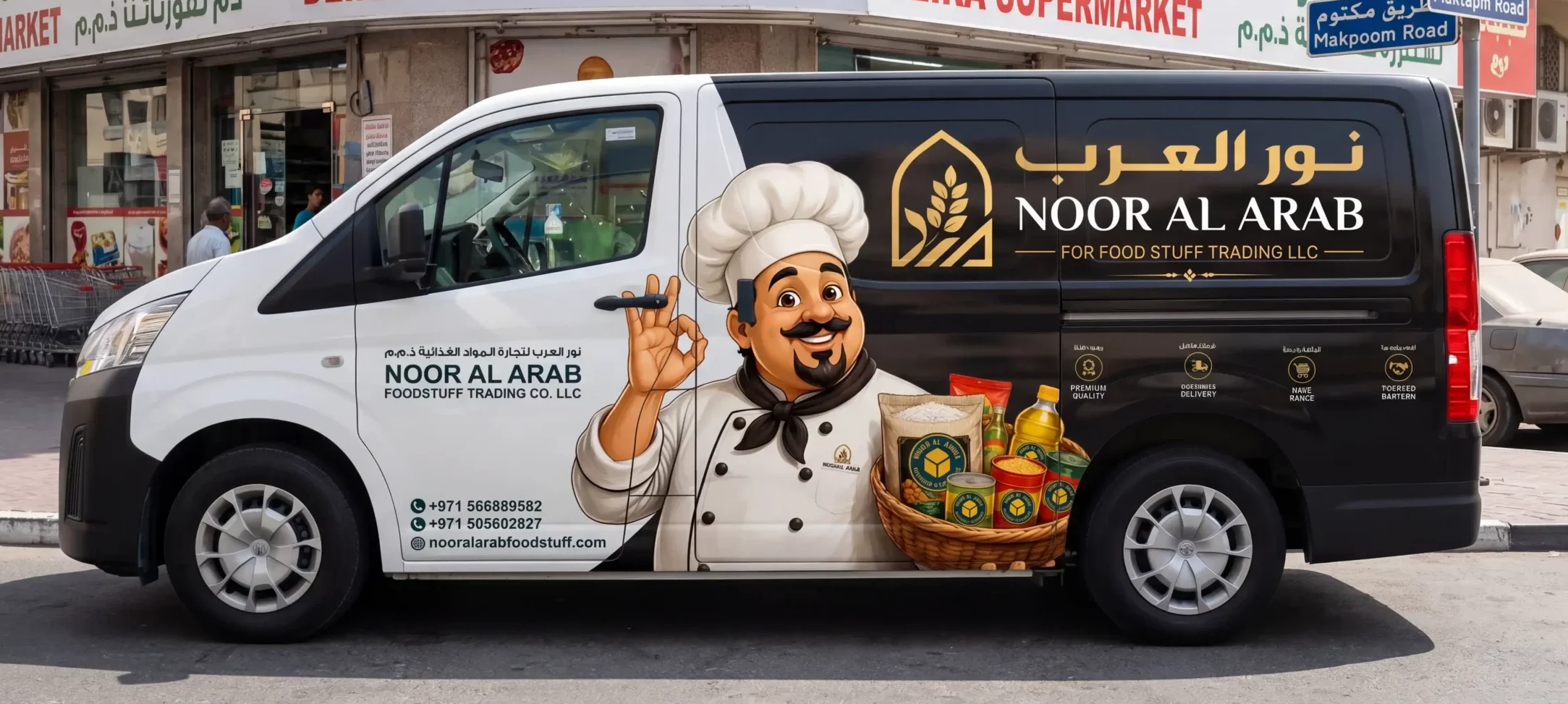
Each Panel Has a Different Audience
In the UAE, vehicles drive on the right, so the driver’s side faces the middle of the road and the passenger side faces the pavement. That simple fact shapes the whole layout.
| Panel | Who sees it | Typical viewing time | What belongs there |
| Passenger (kerb) side | Pedestrians, people in car parks | Several seconds to minutes | Logo, what you do, key services |
| Driver side | Drivers in adjacent lanes | 2–3 seconds | Large logo and a short promise |
| Rear doors | Drivers stopped behind you | 30 seconds or more at signals | Phone, website, QR code, offer |
| Bonnet and front | Oncoming traffic, people ahead | 1–2 seconds | Logo only |
| Roof | Bridges, towers, car parks | Varies | Large logo or brand name |
Passenger Side: The Kerbside Sales Pitch
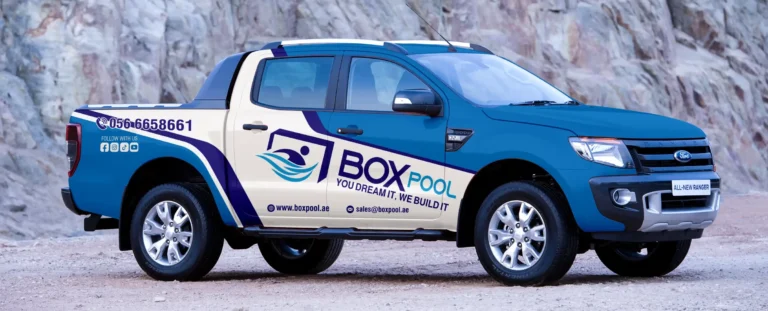
The passenger side is where your van meets customers on foot, outside shops, homes and offices. People here are close and often stationary, so this panel can carry a little more information: your logo, a clear description of what you do and up to three key services.
On most vans, this side also has the sliding door. Keep important words and phone numbers clear of the door seam, the handle and the sliding track, otherwise they are broken up every time the van stops.
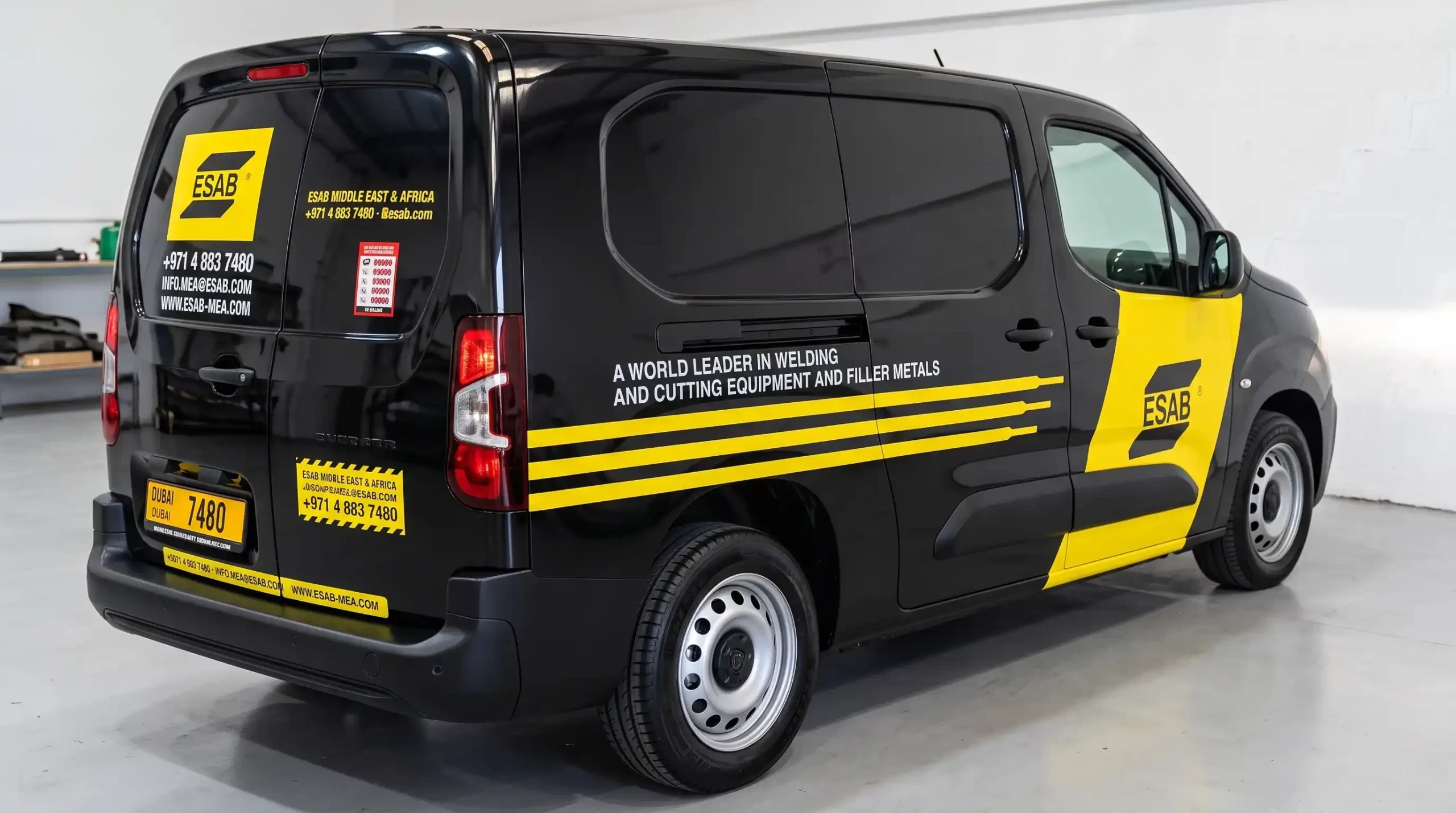
Driver Side: The Highway Billboard
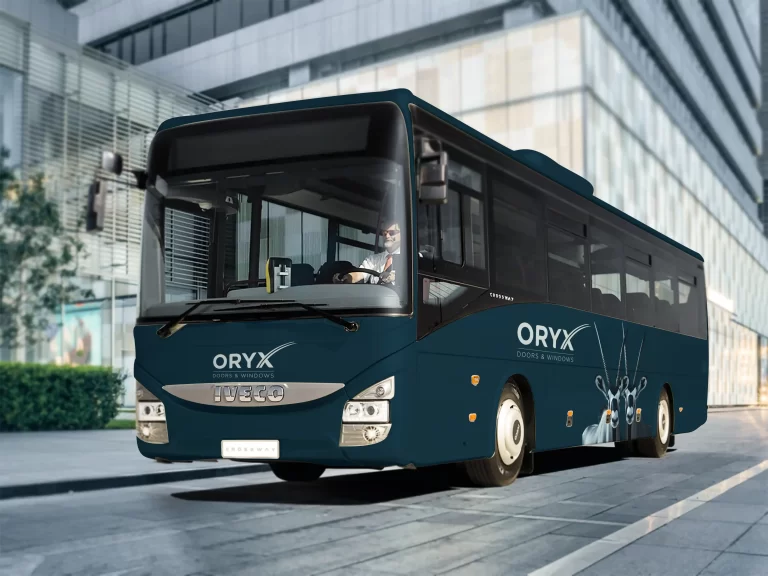
The driver side is mostly seen by other motorists, at speed and from a few metres away. They have two or three seconds at most. That means a large logo, a short line about what you do and nothing else. Small text on this side is wasted space.
Our guide to using typography effectively in vehicle branding explains how to choose fonts that stay readable at distance.
Rear Doors: Where the Selling Happens
The rear is the most valuable panel on the van. Drivers stopped behind you at a signal or in slow traffic have time to read, so this is where your contact details belong: phone number, website, a QR code and, if relevant, an offer.
Two practical points:
- Don’t split key information across the door gap. A phone number broken by the central seam is hard to read and easy to misremember.
- Respect window and visibility rules. Rear windows have specific requirements in Dubai, so confirm what is allowed before planning graphics over glass.
Bonnet and Front: Recognition at a Glance
The front of the van is seen by oncoming traffic and by people ahead who glance at their mirrors. Viewing time is short and the surface is curved, so keep it simple: your logo or brand name on the bonnet and, if the grille area allows, a small brand colour accent. Recognition, not information.
The Roof: Dubai’s Forgotten Panel
Dubai is a vertical city. Vans are seen from bridges, elevated metro lines, multi-storey car parks and office towers. A large logo or brand name on the roof costs little extra and adds an audience most competitors ignore.
The roof also takes the most direct sun, so roof graphics need premium, laminated film. Keep the design simple so any fading over time is less noticeable.
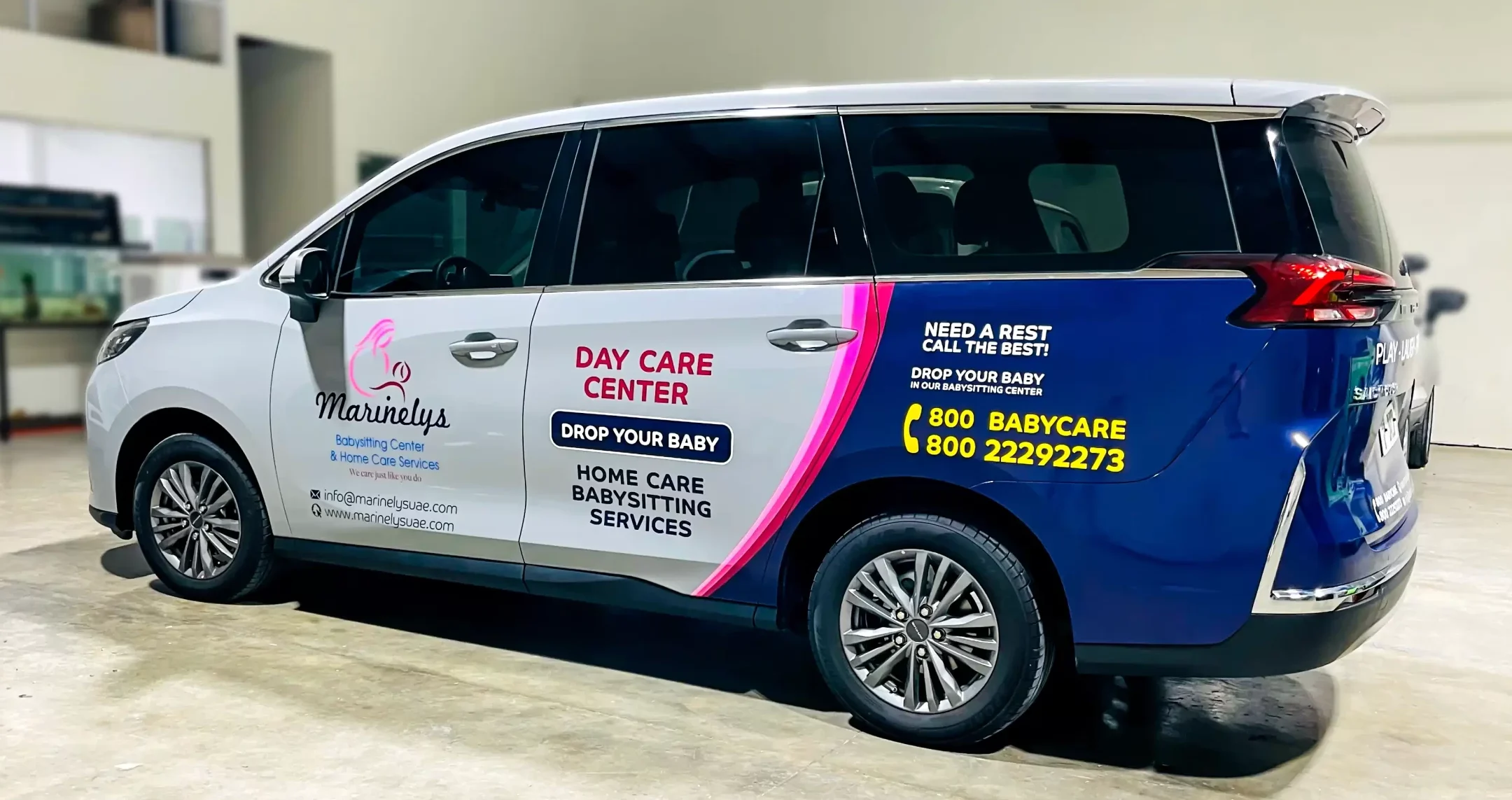
Full Van Wrap or Partial Van Wrap?
A full van wrap covers every panel and gives you complete control over colour and imagery. It suits brands that rely on strong colour or photography and want the van to look like a moving showroom.
A partial van wrap uses the van’s paint as part of the design and covers the panels that matter most. If you are working with a partial budget, prioritise in this order:
- Rear doors
- Passenger side
- Driver side
- Bonnet and roof
We compare the two approaches in detail in the advantages of full wrap vs partial wrap, and our article on the best colours for van wrap graphics helps you choose a base colour that works with your paint.
Keep One Story Around the Whole Van
Treating panels separately does not mean using six different designs. The van should still read as one brand from every angle. Use the same logo, colour palette and core message throughout, and let each panel add a different detail. Colour bands or shapes that run continuously from side to rear help tie the panels together.
Common Panel Mistakes to Avoid
- Text placed across door seams, hinges, handles or fuel caps
- Key details hidden when the rear or sliding doors are open during deliveries
- Faces or product images distorted over wheel arches and curved corners
- Too many messages competing on one side
- Designs created on generic templates that don’t match the exact make and model
Most of these are caught at the mockup stage. Read why van wrap design mockups are essential before you sign off any artwork. For more layout ideas, see the best branding ideas for delivery vehicles.
Design Your Van Wrap with Printzone
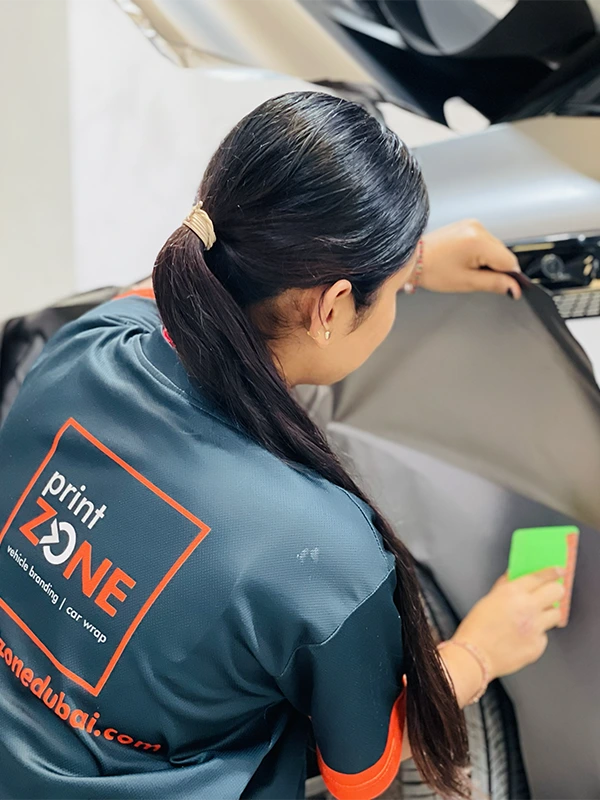
Since 2010, Printzone has designed and installed van graphics for businesses across Dubai, from single service vans to large delivery fleets. We plan every panel on accurate templates for your exact model, handle RTA approval and install with premium films suited to the UAE climate. Explore our van branding services, our vehicle graphics options or our fleet branding services, or contact Printzone for a design consultation.
Frequently Asked Questions
1. What should go on the side of a van wrap?
The sides should carry your logo and a short description of what you do, large enough to read from the next lane. The kerbside panel can also include a short list of key services for people on foot.
2. What should be on the back of a business van?
The rear doors are ideal for contact details, your website, a QR code or an offer. Drivers stopped behind the van at signals have time to read and remember them.
3. Should I put my phone number on the side or the back of my van?
Put it on the back first, where people have time to read it. If you add it to the sides, make it large and keep it away from door handles and panel gaps.
4. Is the van roof worth branding?
Often yes. In Dubai, vans are seen from bridges, multi-storey car parks and office towers, so a large logo on the roof adds visibility at low cost. Roof graphics face the most sun, so use high-quality laminated film.
5. What is the difference between a full van wrap and a partial van wrap?
A full van wrap covers the entire vehicle, while a partial wrap covers selected areas such as the sides and rear and uses the van’s paint colour as part of the design. Partial wraps cost less and can look just as professional when planned well.
6. Which panels should I prioritise on a partial van wrap?
Most businesses prioritise the rear doors and both sides, because they get the most viewing time. The bonnet and roof can be added later if the budget allows.
7. How do I stop text being cut by van doors and handles?
Design on an accurate template for your exact make and model, and review a mockup before printing. Keep key words, phone numbers and logos away from door seams, handles, hinges and fuel caps.
8. How many messages should a van wrap have?
One main message, repeated consistently around the van. Each panel can support it with a different detail, such as services on the side and contact details on the rear.
9. Do van wraps in Dubai need RTA approval?
Yes. Commercial branding on vans in Dubai requires an RTA advertising permit before installation. Your branding provider can prepare the design to RTA rules and handle the application.
10. How long does a full van wrap take to install?
A full van wrap usually takes two to three days to install, including preparation and post-heating. Design approval, the RTA permit and printing add time before installation.

Feel free to leave a comment!
Your email address will not be published. Required fields are marked *