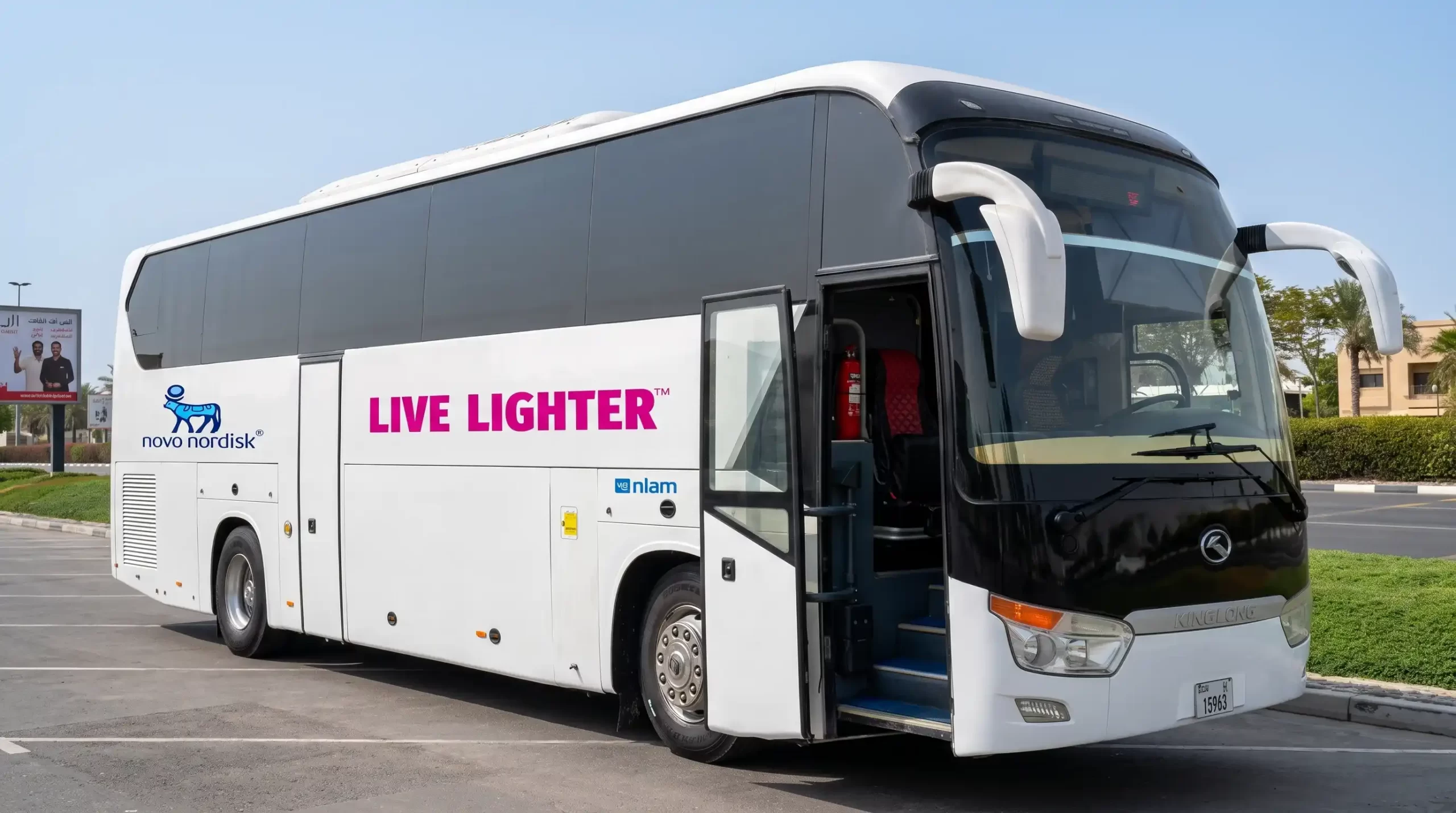
A bus is the largest vehicle most businesses will ever brand. Each side offers a canvas several metres long, and the vehicle spends hours a day on Dubai’s busiest roads, in hotel forecourts, at worksites and outside tourist attractions. It is effectively a billboard that moves to where your audience is.
But buses are not just big vans. Rows of windows break up the design, passengers sit behind the graphics, and doors, luggage bays and engine vents all interrupt the panels. We have already covered the general factors to consider when designing bus branding. This guide goes further, looking at the three most common types of branded buses in Dubai and the design rules that make bus branding in Dubai work.

Three Common Bus Types and What Each Needs
Staff transport buses
Construction, facilities management, manufacturing and logistics companies run large staff bus fleets. These buses follow the same routes twice a day and are seen at worksites, accommodation areas and on major roads. That repetition builds strong recognition.
The design should be clean and corporate: logo, company name and brand colours, with perhaps one line about what the company does. A smart, well-kept staff bus also says something about how a company treats its people, which matters for reputation and recruitment.
Hotel and resort shuttles
Hotel shuttles carry guests between the property, the airport, malls and beaches. Here the bus is an extension of the guest experience. A premium, understated design that matches the property’s identity works better than a loud advertisement. Guests often photograph these vehicles, so finish quality and clean edges matter as much as visibility. Our article on minimalist design in vehicle branding is a useful reference.
Tour, event and campaign buses
Tour operators and brands running campaigns want the opposite: maximum impact. Bold colour, destination imagery and a clear call to action suit these buses. For short-term use, such as an exhibition or product launch, see our guide to temporary vehicle branding for events in Dubai.
Working with Windows
Windows are the biggest design challenge on a bus. Leaving them clear creates gaps in the artwork; covering them needs the right material.
Perforated window film, often called one-way vision film, is printed on one side and covered in small holes. From outside, people see the graphic. From inside, passengers can still see out. A few points to keep in mind:
- The windscreen and driver’s side windows must stay clear.
- Window graphics need approval as part of your RTA permit.
- Perforated film shows images less sharply than solid vinyl, so keep logos and key text on the solid panels.
- At night, interior lights make perforated film more see-through, so the design should still work if the window area fades.
Our overview of RTA guidelines for vehicle branding design in Dubai explains the wider rules.

Designing for the Bus Shape
Large panels are tempting, but placement still decides what people actually see:
- Put the main logo near the front of each side. Viewers notice the front of a bus first as it approaches.
- Treat the rear as prime space. Cars spend long periods behind buses in traffic, so the rear suits your website, phone number or main message.
- Avoid doors and hatches. Folding passenger doors, luggage bay doors and fuel flaps break up text when they open.
- Keep vents clear. Engine grilles and air intakes need to breathe; graphics must work around them.
- Use scale properly. Large type and simple images read better from the pavement and the next lane than detailed artwork.
Materials Built for Long Hours
Buses often run from early morning to late evening and are washed frequently. Use cast or high-performance wrap films with a protective laminate on the solid panels, and quality perforated film on the windows. Riveted and ribbed panels on some bus bodies need careful installation so the film does not lift around fixings. Roof graphics, if used, take the most sun and age fastest.
Permits and Operator Requirements
In Dubai, buses carrying commercial branding need RTA approval before installation. Passenger transport operators may also have requirements linked to their operating licence, so check these early. A professional branding partner prepares the design to the rules and manages the application, which avoids costly reprints. For a full overview, see the vehicle branding company in Dubai page.
Rolling Out Across a Bus Fleet
Bus branding is usually part of a wider fleet programme, so planning matters as much as design:
- Schedule around operations. A full bus wrap typically takes three to five days, so stagger installations to keep routes running.
- Create templates for each model. Most fleets mix makes and sizes, from 30-seat coasters to full-size coaches. One master design adapted to each keeps the fleet consistent.
- Pilot first. Brand one bus, check how it looks on the road and fine-tune before rolling out.
- Plan maintenance. Agree how damaged panels will be replaced so the fleet always looks its best.
Our corporate fleet branding services are designed for exactly this kind of rollout, and the fleet branding checklist for businesses in Dubai is a helpful planning tool.
Brand Your Buses with Printzone
Since 2010, Printzone has delivered bus graphics in Dubai for staff transport fleets, hotels, tour operators and event campaigns. We design for each bus model, plan around windows, doors and vents, manage RTA approval and install with materials suited to long hours under the UAE sun. Explore our bus branding services or contact Printzone to plan your next bus project.
Frequently Asked Questions
1. What is bus branding?
Bus branding means applying a company’s logo, colours and messaging to buses using printed vinyl wraps, decals and window graphics. It is used for staff transport, hotel shuttles, tour buses and advertising campaigns.
2. Can bus windows be covered with graphics?
Passenger windows can often carry perforated one-way vision film, which shows graphics outside while passengers can still see out. The windscreen and driver windows must stay clear, and window graphics need RTA approval in Dubai.
3. What is perforated window film?
It is a vinyl printed on one side and full of small holes, so the design is visible from outside while people inside can see through it. It is commonly used on bus and van windows.
4. How long does it take to wrap a bus?
A full bus wrap usually takes three to five days to install, depending on the bus size and coverage. Design, RTA approval and printing are completed before the bus arrives.
5. Do branded buses in Dubai need an RTA permit?
Yes. Buses carrying commercial branding in Dubai need RTA approval before installation. Passenger transport operators may also have additional requirements linked to their operating licence.
6. Should staff buses be branded?
Yes. Staff buses travel the same routes daily and are seen at worksites, accommodation areas and on main roads, so they build steady recognition for the employer. A professional design also reflects well on how the company treats its people.
7. What design works best for hotel shuttle buses?
Hotel shuttles usually look best with a clean, premium design that matches the property’s colours and logo. Guests often photograph them, so quality of finish matters as much as visibility.
8. Where should the logo go on a bus?
Place the main logo near the front of each side and on the rear, where viewers notice it first. Avoid placing text across doors, luggage compartments, vents or window frames.
9. How long does bus branding last in the UAE?
Quality cast or high-performance vinyl on bus sides can last several years with proper care. Roofs and window film usually age faster because of direct sun exposure.
10. Can a bus be branded temporarily for an event?
Yes. Buses can be wrapped for a few weeks or months for events, launches or campaigns, then removed professionally afterwards. Temporary branding still needs RTA approval if it carries advertising.

Feel free to leave a comment!
Your email address will not be published. Required fields are marked *