Your lease company just called. The three-year-old delivery van you’ve been driving all over Dubai needs to go back next month, and it’s still wearing a wrap with your old logo, your old phone number, and a tagline you retired two rebrands ago.
Whether it’s a lease return, a fleet sale, or simply a rebrand, at some point every wrapped vehicle needs its vinyl removed. And in Dubai’s climate, that process isn’t always as simple as peeling off a sticker.
This guide walks through what actually determines how easily a wrap comes off, what the professional removal process looks like, and what to expect for cost and turnaround.
Quick Answer: What Happens When You Remove a Vehicle Wrap in Dubai?
Professional vehicle wrap removal in Dubai involves using controlled heat to soften the vinyl and adhesive, carefully peeling the film away in sections, then removing any remaining adhesive residue with a safe solvent before inspecting the paintwork underneath. How easily a wrap removes depends heavily on the vinyl’s age, quality, and how much sun exposure it has had, since Dubai’s heat accelerates adhesive bonding over time. A properly installed wrap that’s removed by an experienced team typically comes off without damaging the original paint.

Why Vehicle Wrap Removal Needs to Be Planned, Not Rushed
Wrap removal looks simple from the outside. In practice, it’s a process that can go badly wrong if it’s rushed, done with the wrong tools, or attempted without understanding how the specific vinyl was installed.
Applying too much heat too quickly can damage paint, especially on vehicles with older factory paint or aftermarket respray work. Pulling vinyl off cold, without heat at all, risks tearing the film and leaving stubborn adhesive residue behind that’s far harder to remove afterward.
Planning removal properly, ideally with the same care given to the original installation, protects the vehicle’s resale value and avoids unnecessary paint correction costs down the line.
When You Need Wrap Removal
Rebranding or design refresh. A new logo, updated colors, or a completely new campaign direction all require the old wrap to come off cleanly before new vinyl goes on.
Fleet vehicle resale or lease return. Vehicles going back to a leasing company or being sold on the open market almost always need to return to an unbranded, clean state to meet return conditions or attract buyers.
Wrap reaching the end of its lifespan. A wrap showing significant fading, cracking, or lifting, as covered in our guide to common vehicle vinyl wrap problems in Dubai, often needs full removal before a fresh wrap can be applied correctly.
RTA permit non-renewal. If a business decides not to renew its advertising permit for a particular vehicle, the branding generally needs to be removed to keep the vehicle compliant.
Switching a vehicle between fleet roles. Vehicles reassigned from one branded division to another, or moved out of an actively marketed fleet, often need de-branding before their next use.
What Affects How Easily a Wrap Comes Off
Age of the vinyl. Newer wraps, generally under two years old, tend to remove more predictably than older wraps where the adhesive has had years to cure and bond more permanently with the paint.
Vinyl quality. Higher-grade cast vinyl is engineered for cleaner removal compared to cheaper calendared vinyl, which is more prone to tearing and leaving adhesive residue behind.
Sun and heat exposure. Dubai’s climate accelerates adhesive curing over time. A wrap that’s spent years under direct sun typically requires more heat and more careful technique to remove safely than one kept in shaded parking.
Installation quality. A wrap applied correctly, with proper surface preparation and appropriate adhesive for the vehicle’s paint type, generally removes more cleanly than one installed with shortcuts or on a poorly prepared surface.
Paint condition and type underneath. Original factory paint typically handles the heat used during removal better than certain aftermarket resprays or older, more brittle paint finishes, which need a more cautious approach.

The Professional Removal Process Step by Step
- Inspection and assessment. The installer examines the wrap’s age, condition, and coverage to plan the right heat settings and removal technique for that specific vehicle.
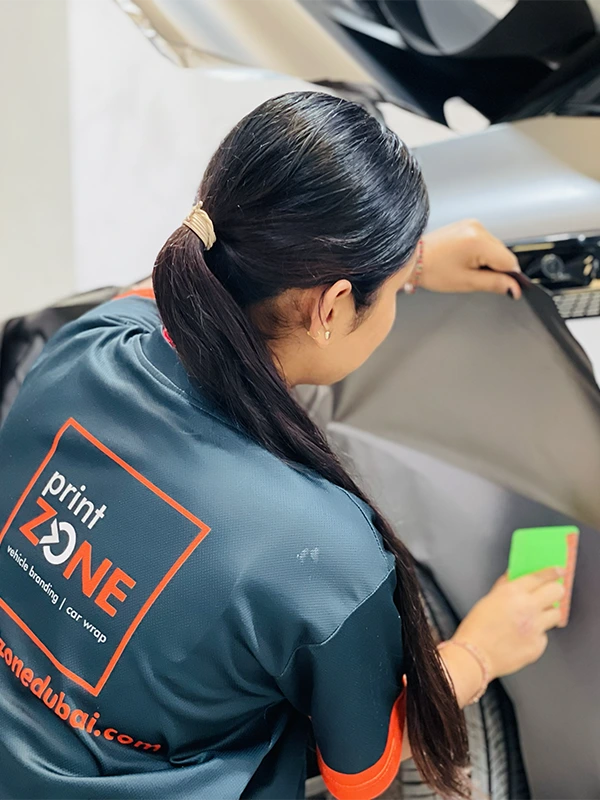
- Controlled heat application. A heat gun is used to gently warm sections of the vinyl, softening the adhesive enough to allow clean peeling without overheating the paint underneath.
- Section-by-section peeling. The vinyl is peeled back slowly and at a consistent low angle, working in manageable sections rather than attempting to remove large panels in one motion.
- Adhesive residue removal. Any leftover adhesive is removed using a solvent designed specifically for automotive paint, avoiding products that could damage or dull the clear coat.
- Surface cleaning and inspection. The vehicle is washed and the paint is inspected for any pre-existing damage that may have been hidden under the wrap, along with confirming the surface is ready for either sale, lease return, or a fresh wrap application.
Does Removing a Wrap Damage the Paint?
Not when it’s done correctly. A well-installed, good-quality wrap that’s professionally removed typically comes off without harming the factory paint underneath, and in many cases the paint underneath looks better than exposed panels, since the wrap has been shielding it from UV exposure and minor road debris the entire time.
Problems tend to arise from two directions: wraps that were installed poorly in the first place, with adhesive that bonds too aggressively to the paint, or removal attempts that rush the heating process and pull vinyl off before the adhesive has properly softened.
This is one of the strongest arguments for using an experienced vehicle branding company in Dubai for both installation and removal, since a team familiar with your specific vinyl and vehicle type knows exactly how much heat and time each job needs.
DIY Removal vs Professional Removal — Why It Matters More in Dubai Heat
DIY wrap removal kits and general online guides rarely account for the adhesive bonding that occurs after years under Dubai sun. What might be a straightforward weekend project in a milder climate can become a paint-damaging mistake here.
Without professional heat guns calibrated to the right temperature, DIY attempts often use excessive heat from household hair dryers or apply too little heat and end up scraping or tearing the vinyl off, both of which risk the underlying paint.
Professional removal also includes proper adhesive residue clean-up, something DIY attempts frequently skip or handle with the wrong products, leaving a sticky, discolored surface that still needs professional correction afterward anyway.

Preparing for a New Wrap After Removal
If removal is happening ahead of a rebrand rather than a resale, the surface preparation stage becomes even more important. Any leftover adhesive residue, oxidation, or surface imperfections revealed after removal need to be addressed before new vinyl goes on, since a fresh wrap applied over an imperfect surface will show every flaw underneath and is more likely to fail early.
This is a good moment to review your fleet branding checklist if you’re planning a full rebrand across multiple vehicles, since removal timing, design approval, and RTA re-permitting all need to be sequenced correctly to avoid downtime.
The Bottom Line
Wrap removal isn’t just the reverse of installation. Done properly, it protects your vehicle’s paint and resale value. Done carelessly, it can undo years of good maintenance in a single rushed afternoon.
Whether you’re returning a leased vehicle, preparing a fleet for resale, or clearing the way for a fresh rebrand, professional removal that accounts for Dubai’s climate and your specific vinyl’s condition is worth the investment.
At Printzone Advertising LLC, we handle wrap removal with the same precision we apply to installation, including full paint inspection and residue-free finishing. If you’ve got vehicles that need de-branding, whether it’s one van or an entire fleet, get in touch with our team to plan the process properly.


Feel free to leave a comment!
Your email address will not be published. Required fields are marked *