If you drive around Dubai for even half an hour, you’ll notice something. Delivery vans, construction trucks, company cars – they’re everywhere. Some catch your eye right away. Others fade into the background like just another white van in traffic.
What makes the difference? Many times, it’s color.
Before you even read a word on a vehicle, your brain reacts to its color. Bright yellow? You notice. Deep black with gold accents? You assume luxury. A splash of green in the middle of desert tones? That one sticks.
That’s why picking the right color for van wrap graphics isn’t just a design choice. It’s a business decision. In a city as competitive as Dubai, where every brand fights for attention, the right shade for van wrap can mean people remember you instead of your competitor.

Why Color Does the Heavy Lifting
Logos matter. Slogans matter. But if you strip everything away, what people usually remember first is the color.
Think about Coca-Cola trucks. You don’t even need to read the words. That red is enough. Same with DHL’s yellow vans because you can spot them from a block away.
Here’s why color pulls so much weight in vehicle branding:
- It makes recognition instant. Even in traffic, your van can be spotted in seconds.
- It sparks emotions. People feel something before they think.
- It ties your van to the rest of your brand. Consistent colors make you look put-together.
- In a city like Dubai, it also carries cultural meaning. One color can signal peace to one audience and prestige to another.
So let’s talk about how each color works and when it makes sense.
Red: Loud, Energetic, Hard to Miss
Red is the show-off color. On a packed road, red jumps out first.
- What it feels like: urgency, energy, boldness.
- Who should use it: restaurants, gyms, car services or anyone who wants to feel fast or powerful.
- Dubai example: A fried chicken delivery van in deep red. You don’t need to read the brand name to know it’s about food and energy.
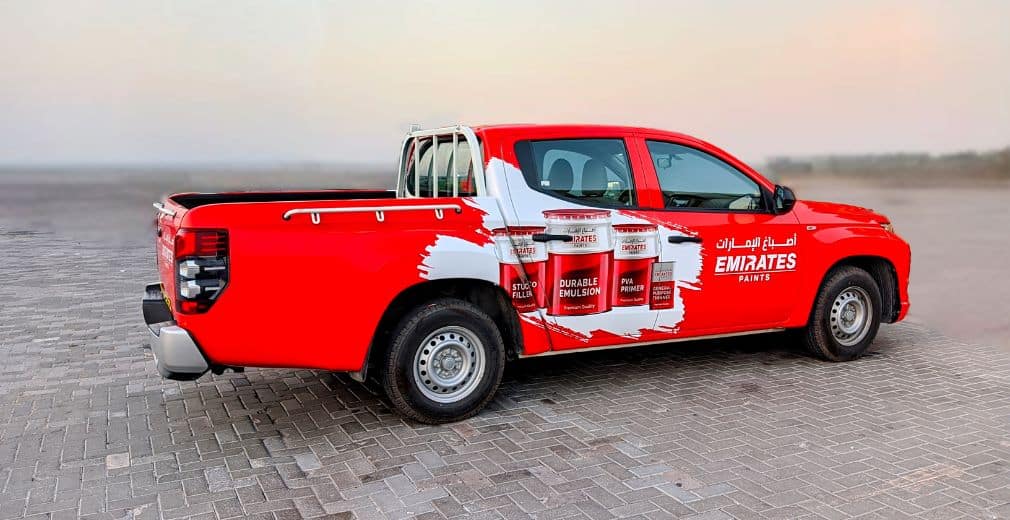

Red grabs attention but can also overwhelm if you plaster it everywhere. Pairing it with white or black tones keeps it strong without being too aggressive.
Blue: Calm, Steady, Trustworthy
Blue is almost everyone’s “safe” color. It’s what people associate with reliability and professionalism.
- What it feels like: peace, stability, safety.
- Who should use it: clinics, banks, schools, tech firms.
- Dubai example: A healthcare van in soft blues. Just the color alone makes you feel you’re in good hands.
Blue doesn’t scream for attention like red, but it wins in trust. If you want long-term relationships, blue works better than flashy tones.
Green: Fresh, Healthy, and Eco-Friendly
In Dubai, with all its sand and steel, green stands out. It reminds people of growth and balance.
- What it feels like: natural, fresh, sustainable.
- Who should use it: organic grocers, landscaping services, wellness brands.
- Dubai example: A grocery delivery van in leafy greens instantly signals freshness and health.
With Dubai leaning more toward sustainability goals, green also tells people your brand cares about the environment.
Yellow: Happy, Bright, and Playful
Yellow is sunshine on wheels. You can’t ignore it.
- What it feels like: joy, optimism, friendliness.
- Who should use it: kids’ services, cafés, entertainment brands.
- Dubai example: A children’s play center van in bold yellow feels fun before you even notice the logo.
The trick? Use it with contrast. Black text on yellow pops. Yellow text on white gets lost.
Orange: Creative and Different
Orange doesn’t show up on roads as often, which makes it memorable when it does.
- What it feels like: creativity, innovation, energy.
- Who should use it: startups, design studios, modern event companies.
- Dubai example: A young tech firm wrapping its vans in orange to signal fresh ideas and excitement.
Orange sits in the middle ground. It is energetic without being as aggressive as red, friendly without being as soft as yellow.
Black: Sleek, Strong, Luxurious
Black doesn’t shout. It whispers sophistication.
- What it feels like: prestige, exclusivity, authority.
- Who should use it: luxury real estate firms, chauffeur services, high-end brands.
- Dubai example: Black Mercedes vans with gold lettering for a chauffeur company. Instantly communicates class.
Black on its own can feel heavy. Pairing it with metallics or sharp contrasts makes it stand out while keeping the premium vibe.
White: Simple, Clean, and Practical
White feels fresh and uncluttered. In Dubai, it also keeps vehicles cooler in the heat.
- What it feels like: clarity, hygiene, openness.
- Who should use it: cleaning services, medical brands, tech firms.
- Dubai example: A cleaning company’s van in white with blue accents. Even parked, it quietly says “professional and spotless.”
White also works well as a backdrop. Bold logos pop against it without distraction.
Mixing Colors for Bigger Impact
Sometimes one color isn’t enough. Pairing colors can create contrast and add depth.
- Blue + White = professional, calm, dependable.
- Red + Yellow = high energy, often used in food.
- Black + Gold = luxury, prestige.
- Green + Brown = natural, eco-friendly.
The danger is overdoing it. Too many colors look chaotic. Stick to two, maybe three at most. Think simple, memorable, easy to read.
Cultural Layers in Dubai
Here’s where many international companies slip up: they forget colors don’t mean the same thing everywhere.
- Green carries religious significance in Islam and is often seen positively.
- White is linked with purity and peace.
- Black here often signals dignity, not just mourning.
Dubai is a mix of cultures. A good designer with local experience can guide you on what works best for a wide audience.
Why Work With Professionals
Choosing a color is one thing. Making it work on an actual van is another.
Professional designers and van wrap companies in Dubai bring experience you won’t find in DIY attempts:
- They know how colors behave under sunlight and sand.
- They balance shades so text stays legible.
- They use high-quality vinyl that doesn’t fade in a few months.
- They make sure your wrap meets local regulations.
That last part matters. The last thing you want is a wrap that looks great but gets you fined.
Mistakes People Make With Color
Some wraps don’t work because of bad choices, not bad colors. Watch out for these common mistakes:
- Yellow text on white – nobody can read it.
- Using every color under the sun – it looks messy.
- Ignoring your brand colors – the van doesn’t match your website or ads.
- Cheap vinyl – colors fade fast in Dubai heat.
Avoid those, and your van wrap will look sharp and last longer.
Imagine This on the Road
You’re stuck in traffic near Dubai Mall. Two vans pull up. One is plain white with a tiny logo. The other is green with bold fruit graphics. Guess which one pops into your head the next time you need groceries?
Or picture this: a row of black SUVs with gold logos waiting outside a hotel. No need to read the text. You already know they’re offering something premium.
That’s how color turns a simple van into a rolling memory cue.

The Bottom Line
There isn’t one “best” color for van wraps. The best color is the one that tells your story, fits your values, and connects with your audience.
Red grabs attention. Blue builds trust. Green signals freshness. Yellow spreads joy. Orange feels creative. Black conveys luxury. White keeps things clean.
Pick a color that fits your brand’s personality, then work with professionals to bring it to life. Keep designs simple, make sure text is readable, and choose materials built for Dubai weather.
Because here’s the truth: your van isn’t just a vehicle. On the roads of Dubai, it’s a moving billboard. The color you choose decides whether people forget it… or remember it long after the light turns green.


Feel free to leave a comment!
Your email address will not be published. Required fields are marked *